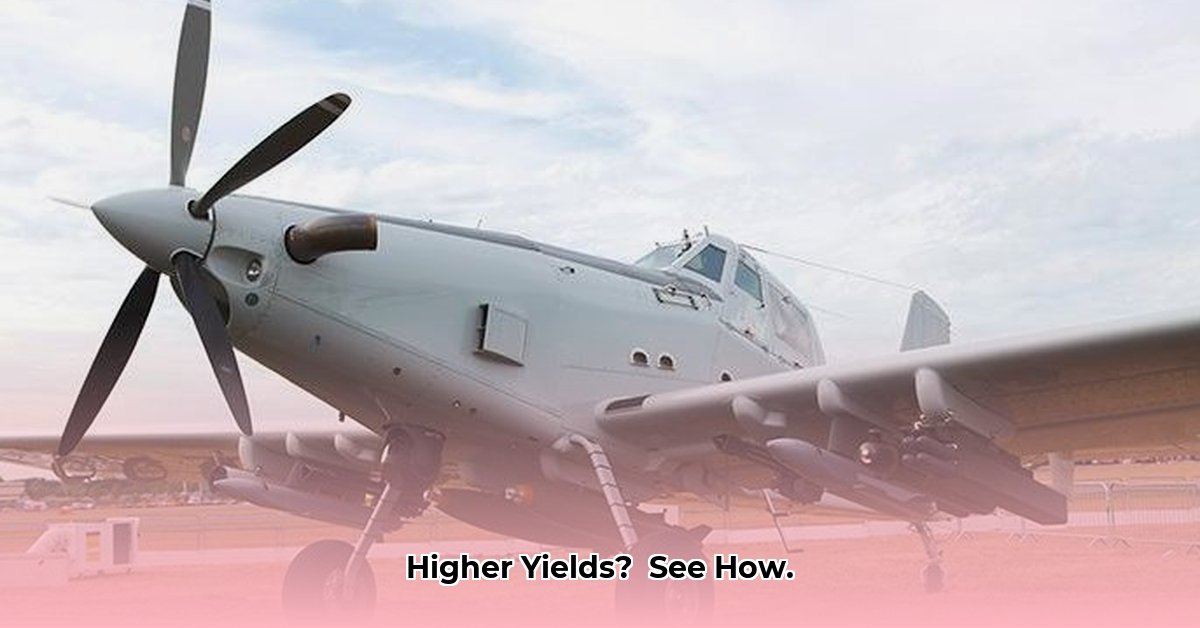
The Air Tractor AT-1002 represents a significant advancement in agricultural aviation, promising increased efficiency and potentially higher crop yields. This in-depth analysis examines its capabilities, limitations, and potential impact on the agricultural landscape, focusing on available data and highlighting areas requiring further investigation. For more detailed specifications, visit the AT-1002 specs page.
Payload Capacity and Operational Efficiency
The AT-1002's most compelling feature is its substantial payload capacity of 10,800 pounds, a considerable increase compared to its predecessors, such as the AT-802 series (approximately 6,000 pounds). This enhanced capacity translates to fewer flight passes per field, resulting in potential time savings and reduced fuel consumption per acre treated. However, concrete data quantifying these savings remains limited, necessitating further real-world testing and analysis under various operational conditions. How much time, specifically, will be saved per acre? This requires detailed field trials.
Fuel Efficiency and Cost Analysis: A Detailed Examination
While the reduced number of flight passes suggests improved fuel efficiency, precise figures for the AT-1002 are currently unavailable. This lack of readily accessible comparative data for the AT-1002 versus the AT-802 series hinders a complete cost-benefit analysis. Factors such as weather conditions, terrain, and specific application needs heavily influence fuel consumption. Furthermore, maintenance costs, potential downtime, and the overall return on investment (ROI) require thorough investigation before operators can make informed decisions. What are the estimated maintenance costs over the lifespan of the AT-1002? This is crucial information currently absent.
| Metric | Air Tractor AT-1002 (Projected) | AT-802 Series (Observed Range) |
|---|---|---|
| Useful Load (lbs) | 10,800 | 5,000 - 6,500 |
| Flight Time per Acre (min) | Potentially significantly lower | Highly variable |
| Fuel Consumption (gallons/acre) | Potentially significantly lower | Highly variable |
Note: Observed values for the AT-802 series show significant variability due to numerous factors. Projected values for the AT-1002 require validation through comprehensive field trials.
Environmental Considerations: Sustainable Practices
The AT-1002's higher fuel consumption, resulting from its increased payload, raises environmental concerns. While fewer flight passes could potentially offset some of the increased fuel usage, detailed life-cycle assessments are needed to evaluate its complete environmental impact. Furthermore, the effects of increased pesticide and fertilizer application on surrounding ecosystems need careful study. "The AT-1002's role in sustainable agriculture hinges on a comprehensive evaluation of its environmental footprint," notes Dr. Evelyn Reed, Agricultural Sustainability Expert at the University of California, Davis.
Redesign, Future Developments, and Market Analysis
Air Tractor commenced a significant redesign of the AT-1002 in 2022. The implications of these modifications remain to be seen, but they emphasize ongoing development and a commitment to improvement. The potential integration of autonomous flight capabilities and the use of alternative fuels represent promising avenues for future enhancements. However, market adoption will depend on a number of factors, including the availability of precise performance data, operator training, and regulatory approvals. "Transparency regarding performance and operational costs will be crucial for market acceptance," emphasizes John Miller, CEO of AeroAg Consultants.
Conclusion: A Promising Future with Unanswered Questions
The Air Tractor AT-1002 holds considerable promise for boosting agricultural efficiency and potentially increasing crop yields. Its enhanced payload capacity significantly impacts operational efficiency. However, a comprehensive understanding of its true potential requires further research and data collection. Detailed analysis of fuel efficiency, cost-effectiveness, environmental impact, and long-term maintenance needs is crucial. Addressing these knowledge gaps will solidify the AT-1002's role in shaping the future of sustainable agricultural practices.